Your portfolio is the first frame of your next film.
An 8-week creative and critical practice course building design research skills, creative confidence, and career readiness for emerging filmmakers. Culminates in a live portfolio website and capstone redesign.


Fridays at 10 AM, 2.5 hours. Lecture-lab format. Industry case studies per phase — Netflix, Mad Max, Pixar — taught alongside your own portfolio build.
RESERVE YOUR SEATStrong production skills aren’t enough anymore.
Filmmakers enter a competitive industry with sharp production chops but limited strategic and research frameworks. Employers increasingly expect creative professionals who can think critically and work iteratively.
This course introduces design thinking as a core creative process — reframing, prototyping, and iteration — taught through real film industry case studies and a capstone redesign project.
Built for the filmmaker the industry keeps overlooking.
Emerging filmmakers looking to land that grant, internship, job, client, or opportunity.
2026 high school or college graduate, doing more video, film, and media work.
The portfolio or website of your dreams — the one you’d love to share with employers, clients, and opportunities that truly represents your best creative self.

Taught by Shamim Shoomali.
Media Artist, Design Researcher, and Ph.D. Candidate in Digital Media at Georgia Tech, based in Atlanta. She specializes in UX and Visual Design, with a focus on playful design research, interactive media, and indie animation.
What you’ll be able to do.
Seven learning objectives mapped to weekly deliverables, peer critique, and a final portfolio submission.
 Portfolio example
- 01
Apply design research methods — observation, interviews, synthesis — to real film and media challenges.
- 02
Reframe creative problems using “How Might We” questions and root-cause analysis.
- 03
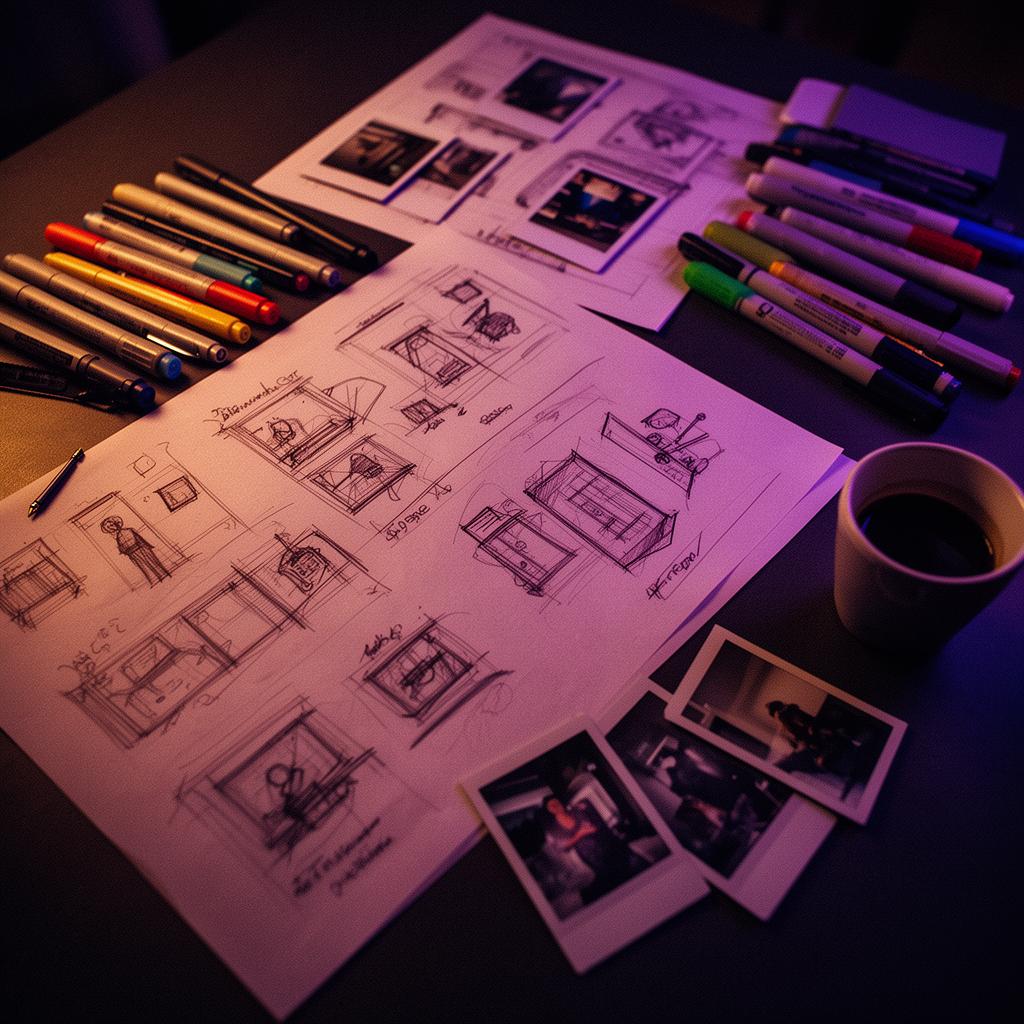
Build and test low-fidelity prototypes — storyboards, pitch decks, concept treatments.
- 04
Analyze real film industry decisions through a design thinking lens.
- 05
Design and launch a personal portfolio website that showcases resume, work, and process.
- 06
Translate experiential learning into portfolio artifacts and career-ready language.
- 07
Collaborate and give structured critique in a studio-style environment.
The Weekly Plan
 Scene 05
Lecture-lab hybrid. One live session per week with independent portfolio work between meetings. Real industry cases threaded through every phase.
Five rituals that shape the cohort.
“The Pitch Room”
Biweekly rapid-fire pitch sessions where you present half-formed ideas and get structured feedback. Builds confidence and mirrors real industry culture.
“Reverse the Brief”
Receive a bad, vague, or broken creative brief and redesign it before you can respond. Teaches critical thinking and problem framing.
“Industry Autopsy”
Small groups dissect a real film project that struggled — a flop, canceled show, or troubled production — and diagnose it with design research methods.
“The 48-Hour Prototype”
A fast, low-stakes sprint where you build and present a rough concept in two days. Mirrors real production pressure.
“Your Site, Your Story”
A running portfolio website project woven through all 8 weeks. Audit, define, wireframe, iterate, and launch a live site showcasing your resume and work.
The Deliverables.
Insight Report
A 1-page synthesis of audience interviews, framed as a design opportunity.
Problem Reframe Deck
A short visual presentation that reframes a real industry challenge using design thinking.
Prototype + Feedback Log
Documented evidence of iteration based on real user responses to your work.
Capstone + Live Portfolio
A capstone redesign of a real film project, plus a published portfolio website ready for job applications.
One student who finishes the cohort with a B or higher will be drawn at random to receive a special raffle prize.
* COHORT 01 IS CAPPED AT 15 FILMMAKERS — FIRST APPLIED, FIRST SEATED.
Common questions.
Do I need to know how to code?
No. The course focuses on design thinking and no-code tools so you keep full creative control without the technical overhead.
What’s the weekly time commitment?
One 2.5-hour live session per week, plus a few hours of independent work on your portfolio thread and weekly deliverables.
How do I save my seat?
Fill out the registration form at the bottom of this page. We'll follow up by email with next steps for Cohort 01.
How many filmmakers are accepted?
Cohort 01 is capped at 15 seats so every project gets real critique and instructor attention.
Is this only for Atlanta residents?
Cohort 01 is curated for the metro Atlanta community — Fulton, DeKalb, Cobb, Gwinnett, Clayton — to foster local collaboration. Sessions are hybrid.
What if I don’t have a ton of finished work yet?
You don’t need a reel of features. Shorts, spec work, school projects, or behind-the-scenes footage are enough — we teach you how to frame what you have.
Register for Cohort 01.
Tell us who you are and what you want out of the class. We'll follow up by email with next steps.